


Confluence Cloud has evolved far beyond a traditional documentation platform. Today, many organizations use it as a central workspace for operational reporting, project tracking, dashboards, and knowledge sharing. At the…
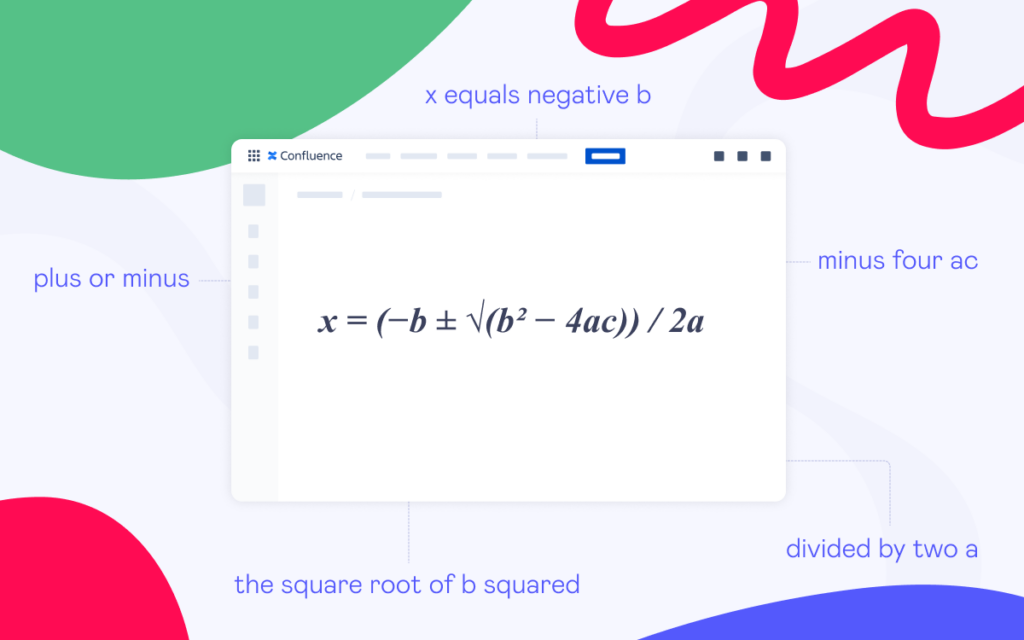
If you’ve ever tried to put mathematical formulas in Confluence tables, you know that there’s no rendering, no summations, no fractions, just characters. You type something like \sum_{i=1}^{n} i, and…
Structured OKR tracking keeps teams aligned by turning weekly updates into comparable signals: a shared cadence, standardized percent rules tied to outcomes, and clear dashboards showing progress, confidence, evidence, and next actions, so leaders can spot drift early and course-correct fast.
Engineering analytics are valuable across an entire organization, but contributor-level data and REST API access often need to be limited to specific roles or teams. Until recently, Awesome Graphs for…
At some point, almost every Jira team realizes the same thing: work can fail because processes aren’t followed consistently. That realization usually leads to the Atlassian Marketplace and a search…
Reporting in Confluence quickly becomes complicated when the data comes from multiple sources. What starts as a simple update can turn into a patchwork of scattered tables, Jira work items,…
As teams grow and projects multiply, something subtle starts happening to Jira work items. Tasks get longer and more detailed, yet somehow part of them are still being overlooked. Because…