15K+
 4.9/5
 3M
Build an API capacity planning model in Confluence
Context and Challenge
A performance engineer at a financial organization needed to understand expected load across hundreds of APIs to plan the resources required to support them.
For each API, expected traffic from different channels is documented on a standardized Confluence page. Internally, the team calls these “contract pages.” A contract page describes which channels send traffic to a particular API and how much load each of them is expected to generate.
For example, if several channels use the same API, their expected TPS needs to be combined to understand the total expected load on that API.
With hundreds of APIs and hundreds of contract pages, calculating and maintaining these figures manually would be difficult to scale. The workflow had previously been managed in Microsoft Access before the engineer rebuilt it in Confluence.
Result
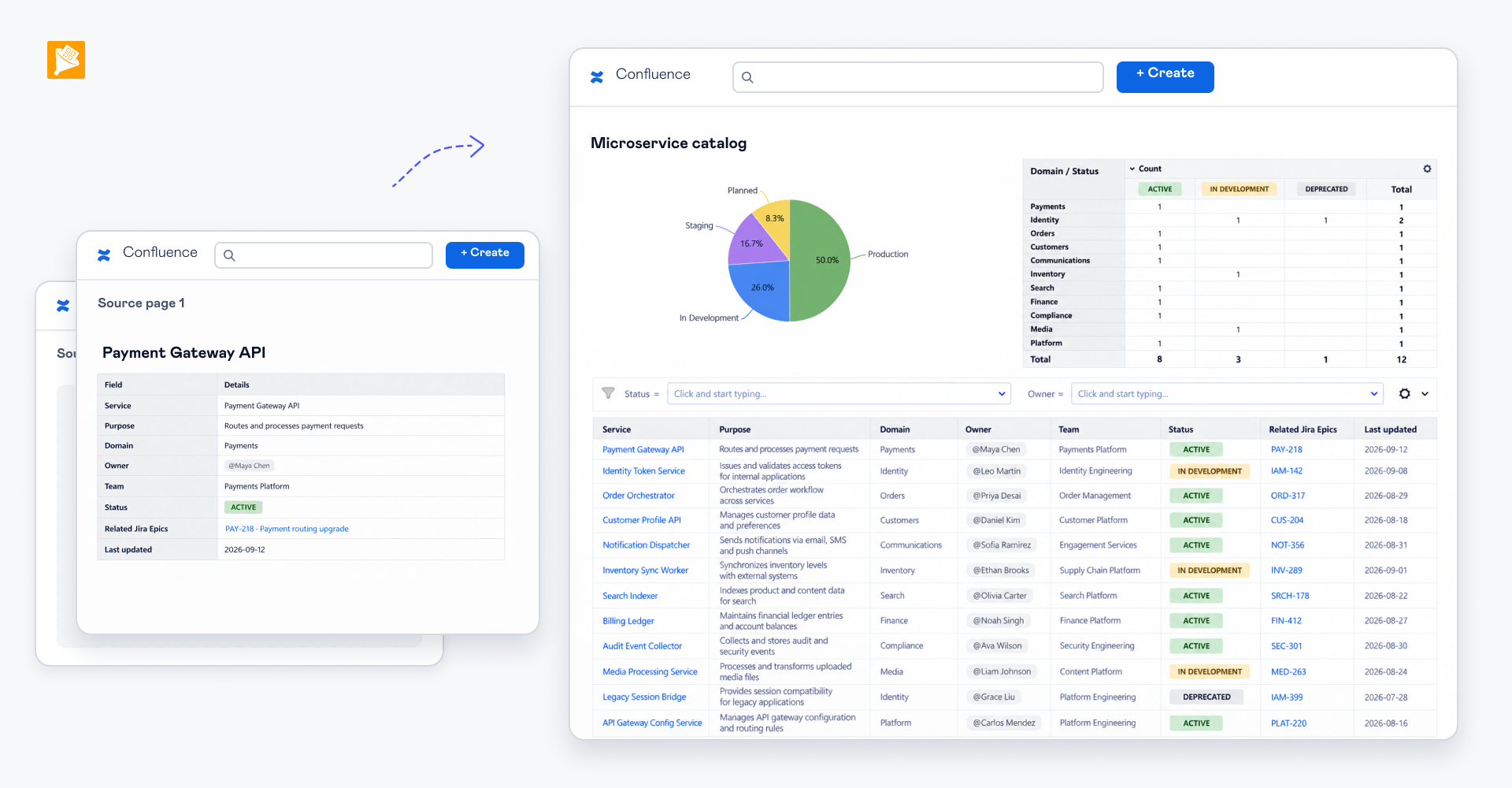
The capacity planning model now lives in Confluence, with traffic data from individual API pages automatically brought together and aggregated. The performance engineering team can calculate TPS across channels and APIs and use the resulting figures for resource planning without maintaining a separate database.
The setup is also reusable across hundreds of pages. Instead of manually configuring the same macros for every API, the engineer uses the page title as a variable, allowing the same setup to be reused on another page without changing it manually.
How it is built
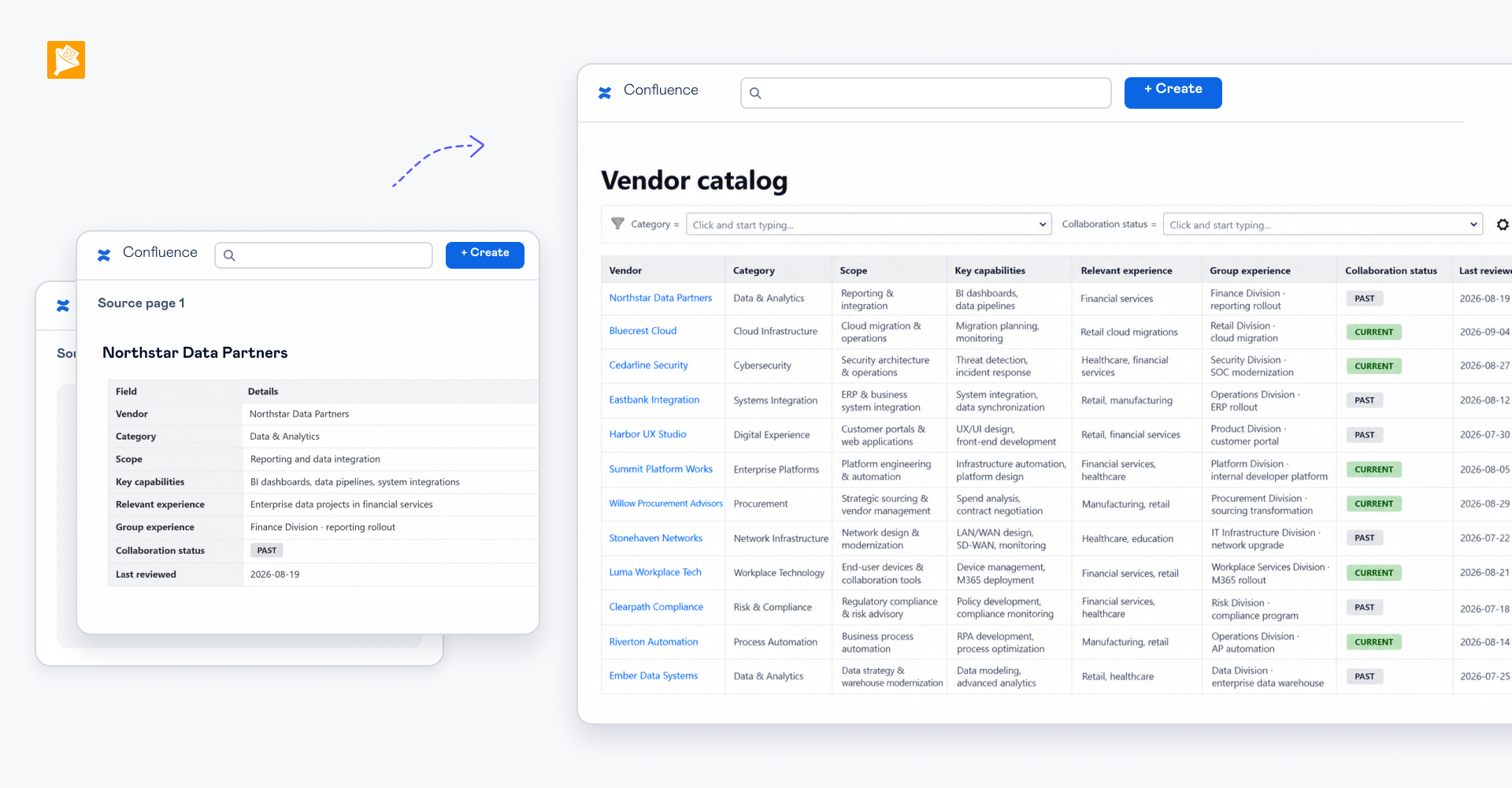
- The workflow uses Page Properties / Page Properties Report to collect structured traffic information from multiple API pages into a consolidated view. The same cross-page workflow can also be built with Table Excerpt / Table Excerpt Include, a more flexible alternative for complex datasets. It can collect tables with multiple data rows, work with macro-generated tables, and provide more options for selecting and combining data from source pages.
- Table Transformer uses SQL to aggregate the collected traffic data, including combining TPS from multiple channels to calculate the expected API load used for capacity and resource planning.